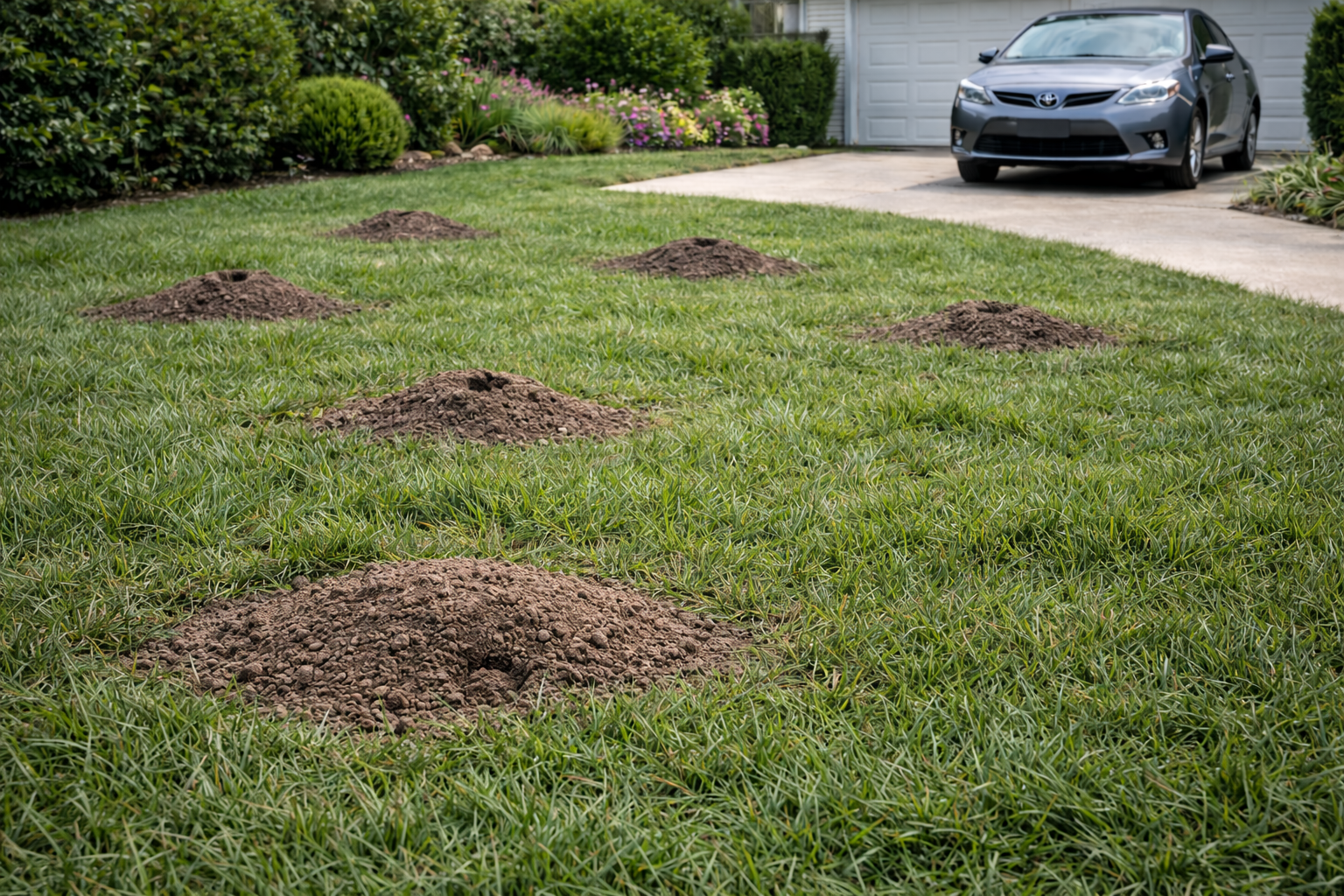
Gopher Activity in Wildomar, CA

Wildomar, situated in southwestern Riverside County along the I-15 corridor between Murrieta and Lake Elsinore, experiences active gopher populations year-round. The community's combination of residential properties, agricultural land, and proximity to the Santa Rosa Plateau creates ideal conditions for pocket gopher establishment and persistence. Understanding gopher behavior and seasonal patterns specific to this region helps property owners recognize and respond to activity on their land.

Why Wildomar Has Significant Gopher Activity

The environmental conditions in Wildomar support thriving gopher populations across multiple habitat types. The area's soil composition—primarily sandy loam and clay loam typical of the southwestern Riverside County foothills—provides excellent burrowing conditions. These soil types, derived from granitic parent material, are neither too compacted nor too loose, allowing gophers to excavate extensive tunnel systems with reasonable effort.

Wildomar's Mediterranean climate, characterized by warm, dry summers and mild winters with periodic rainfall, creates predictable seasonal patterns that gophers exploit effectively. Winter and early spring precipitation triggers vegetation growth that attracts gophers to yards and landscaped areas. The region receives most of its annual moisture between November and April, establishing a distinct growing season that influences gopher foraging behavior.

Residential irrigation practices throughout Wildomar's neighborhoods—particularly in master-planned communities and rural estates—maintain soil moisture year-round. This artificial moisture sustains plant roots and tender growth that gophers actively seek, even during naturally dry periods. The contrast between irrigated yards and surrounding dry hillsides makes landscaped properties particularly attractive to foraging gophers.

Proximity to undeveloped land enhances gopher populations significantly. The Santa Rosa Plateau Ecological Reserve, located northwest of Wildomar, serves as a natural reservoir of gopher populations. As development expands into previously open space, gophers naturally colonize new residential areas adjacent to these wild habitat corridors.

Common Gopher Species in Wildomar

The Botta's pocket gopher (Thomomys bottae) is the predominant gopher species throughout Wildomar and the broader southwestern Riverside County region. This species demonstrates remarkable adaptability across diverse soil types and vegetation communities, making it the most frequently encountered gopher in residential settings.

Botta's pocket gophers are medium-sized rodents measuring approximately 5 to 7 inches in body length, with relatively short tails ranging from 1 to 2 inches. Their fur typically ranges from brown to grayish-brown, providing effective camouflage in local soil conditions. These gophers possess distinctive external cheek pouches—the defining characteristic of pocket gophers—which extend from their mouth to their shoulders. They use these pouches to transport soil, seeds, and plant material within their burrow systems. Their front feet feature elongated claws designed specifically for excavation, and their small eyes and ears reflect their primarily subterranean lifestyle.

In Wildomar's specific environment, Botta's pocket gophers occupy diverse microhabitats ranging from irrigated residential yards to native sage scrub and chaparral communities on the surrounding hillsides. They establish populations in both old-growth neighborhoods with mature landscaping and newer subdivisions with developing plant material. Their presence correlates strongly with soil depth and moisture availability, explaining their concentration in irrigated areas and spring-fed valleys.

When Gopher Activity Peaks in Wildomar

Gopher activity in Wildomar demonstrates clear seasonal patterns influenced by local climate and reproductive cycles. Breeding activity typically occurs from January through March, coinciding with late winter and early spring conditions. During this period, adult males actively search for mates, expanding their tunnel systems and moving across the landscape more frequently than during other seasons. This increased movement and excavation makes gopher presence more obvious to property owners during winter and early spring months.

Spring rains, which occur sporadically between February and April in Wildomar, trigger secondary peaks in gopher activity. Moisture softens soil, making tunneling easier and stimulating new plant growth. Gophers respond to this flush of fresh vegetation by intensifying foraging activities and expanding existing burrow systems. Properties with spring irrigation or natural drainage patterns show heightened gopher activity during these periods.

Summer months bring reduced above-ground activity as dry conditions and high temperatures limit gopher movement. However, gophers remain active in deeper tunnel systems where soil moisture persists, particularly in irrigated yards. They continue feeding on plant roots and stored vegetation underground throughout summer, even when surface signs diminish.

Fall activity typically remains moderate unless significant rainfall occurs. Gophers prepare for winter by expanding food caches and strengthening tunnel systems. Late October through November can bring renewed surface activity as gophers respond to cooling temperatures and occasional fall moisture.

Signs of Gopher Damage in Wildomar Yards

Property owners in Wildomar should recognize specific indicators of gopher presence and damage. The most visible sign is fresh earth mounding—gophers excavate soil from tunnel systems and deposit it in characteristic cone-shaped or fan-shaped mounds at tunnel openings. These mounds, typically 2 to 4 inches high and 4 to 8 inches in diameter, appear in lawns, planting beds, and vegetable gardens. In Wildomar's clay-loam soils, mounds often retain their shape longer than in sandier regions, remaining visible for extended periods.

Irrigation system damage frequently occurs in Wildomar properties where gopher tunnels intersect with drip lines, soaker hoses, or underground irrigation pipes. Gophers damage these systems by gnawing plastic tubing or creating tunnels that collapse pipe sections. Property owners may notice reduced water pressure, pooling water in specific yard areas, or unexplained changes in plant health correlating with irrigation failure.

Plant damage manifests in multiple ways throughout Wildomar landscapes. Gophers girdle small tree bark at or below soil level, killing young trees planted in yards and new landscaping. Ornamental shrubs show wilting or death in localized areas where gophers have severed roots. Vegetable gardens experience particularly visible damage as gophers consume planted crops underground or clip foliage at the soil line. Native plant areas experience damage to species like California buckwheat and toyon as gopher populations increase.

Runways or visible burrow entrances appear in well-maintained lawns and mulched planting beds. Some entrances show no mounding; these burrows have concealed openings. Multiple burrow systems in a small area indicate either a single gopher with an extensive territory or multiple individuals sharing habitat space.

Landscape Considerations for Wildomar Properties

Wildomar's diverse neighborhoods showcase varied landscaping approaches, from native plant gardens reflecting regional ecology to traditional turf and ornamental landscapes. The area's elevation gradient—ranging from approximately 1,200 feet near Lake Elsinore to over 1,800 feet on surrounding highlands—influences both native plant communities and landscaping choices. Lower elevation properties often feature desert-adapted plants, while higher elevation lots support more temperate plant communities.

Gophers show differential preferences for various landscape plants common to Wildomar yards. Tender perennials, young shrubs, newly planted trees, and vegetable gardens attract intensive gopher activity. Native oaks, established junipers, and mature shrubs experience less damage than young or herbaceous plants. However, gophers will damage virtually any plant if hungry enough or if the plant occupies preferred gopher habitat.

Hardscape elements—including concrete patios, stone pathways, and raised planting beds—provide some protection from gopher damage, though determined gophers navigate around these barriers. Properties balancing softscape and hardscape elements may experience more localized gopher impacts than fully vegetated yards. Mulched planting beds represent preferred habitat as they combine loose, workable soil with root systems and organic matter.

The contrast between Wildomar's irrigated residential properties and surrounding dry chaparral highlights why gophers concentrate in developed areas. Native vegetation on the Santa Rosa Plateau and surrounding hills supports lower gopher densities than the resource-rich environment of residential yards. This creates a consistent pressure of gophers moving from marginal wild habitat into more favorable residential zones.